User-centred design · Arduino · Physical prototype
20/20 Vision
A portable light timer that supports healthier screen habits through visible work sessions, breaks and ambient light.
- My role
- Research, design & prototyping
- Audience
- Screen users aged 18–30
- Tools
- Arduino, 3D printing & LEDs
- Context
- UiO · IN1060 · 2024
01 · The problem
Better breaks from screens
Extended screen use can cause temporary discomfort including irritated eyes, headaches, blurred vision and pain in the neck and back.
Our group wanted to create a useful screen-free solution for young adults using screens for work or leisure.
Design question: How might a physical artefact make healthy screen breaks easier without becoming another interruption?
A domain expert introduced the 20-20-20 rule: after 20 minutes of screen use, look at something roughly six metres away for 20 seconds. It became an important starting point, but needed to adapt to real preferences.
02 · The process
Users chose the direction
We used interviews, observation, focus groups, task-based testing and a final evaluation.
Interviews and observations explored posture, viewing distance, break frequency and symptoms. We synthesised the findings in affinity diagrams and brought them into two focus-group workshops.
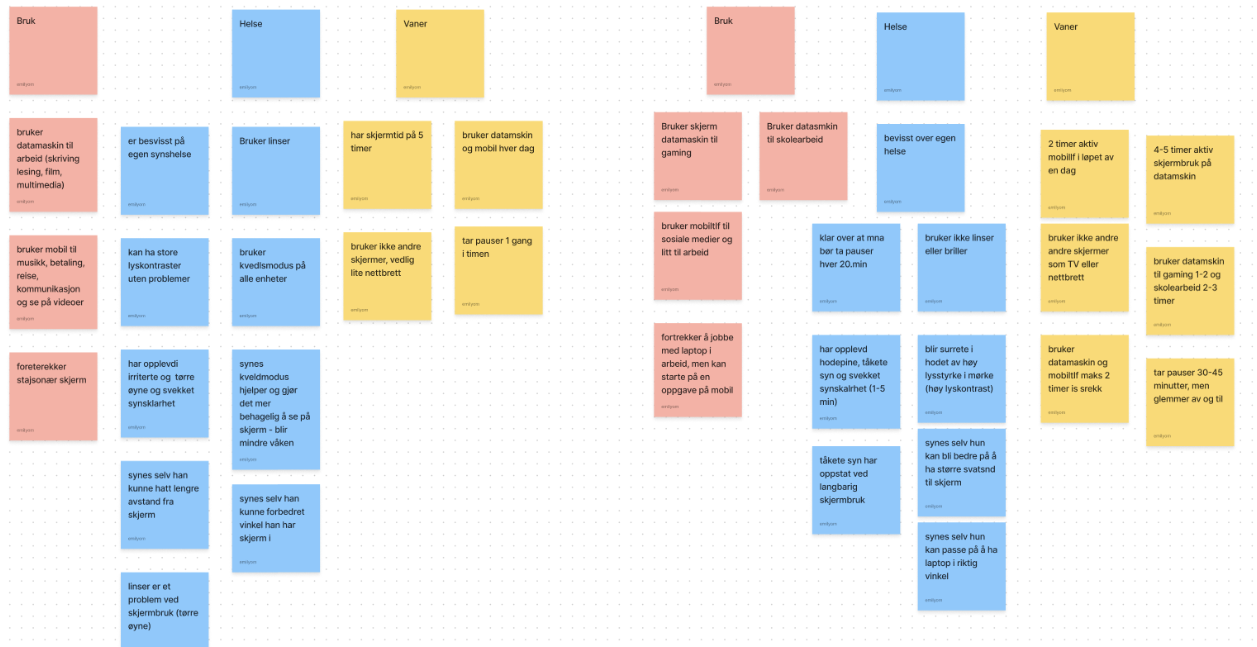
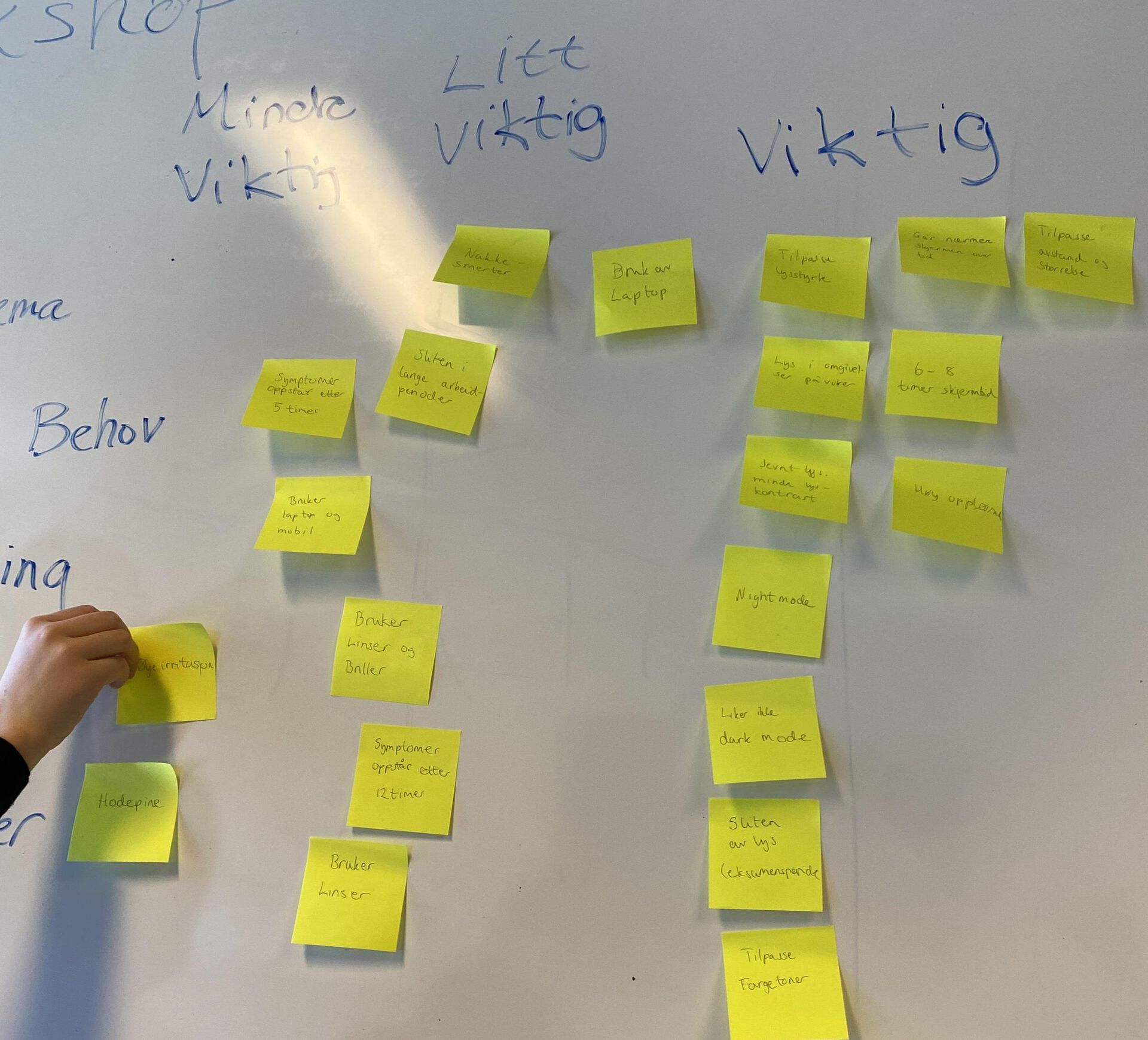
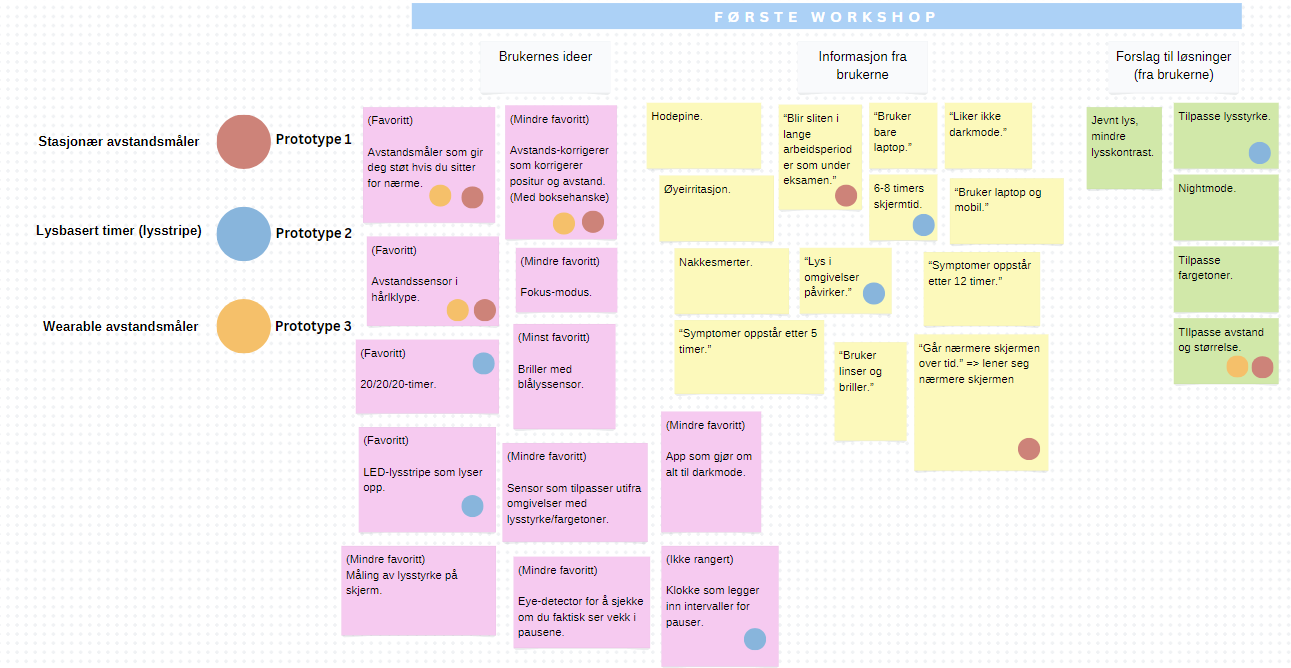
We presented three low-fidelity concepts: a stationary distance monitor, a wearable distance monitor and a light-based timer. Participants showed the clearest interest in the timer.
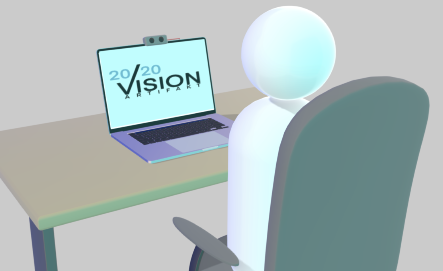
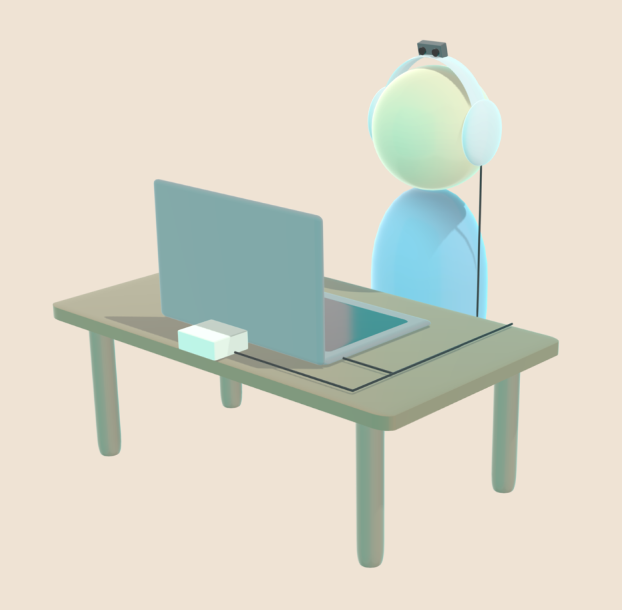
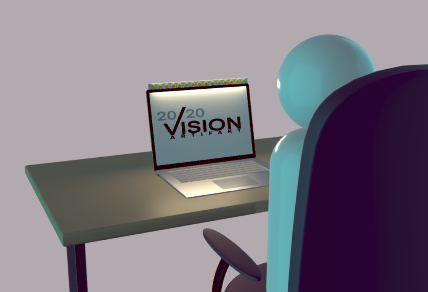
Light and time led the form exploration towards the sun and sundial. A golden work light and dynamic colours gave the product character.

03 · The outcome
A physical rhythm for work and rest
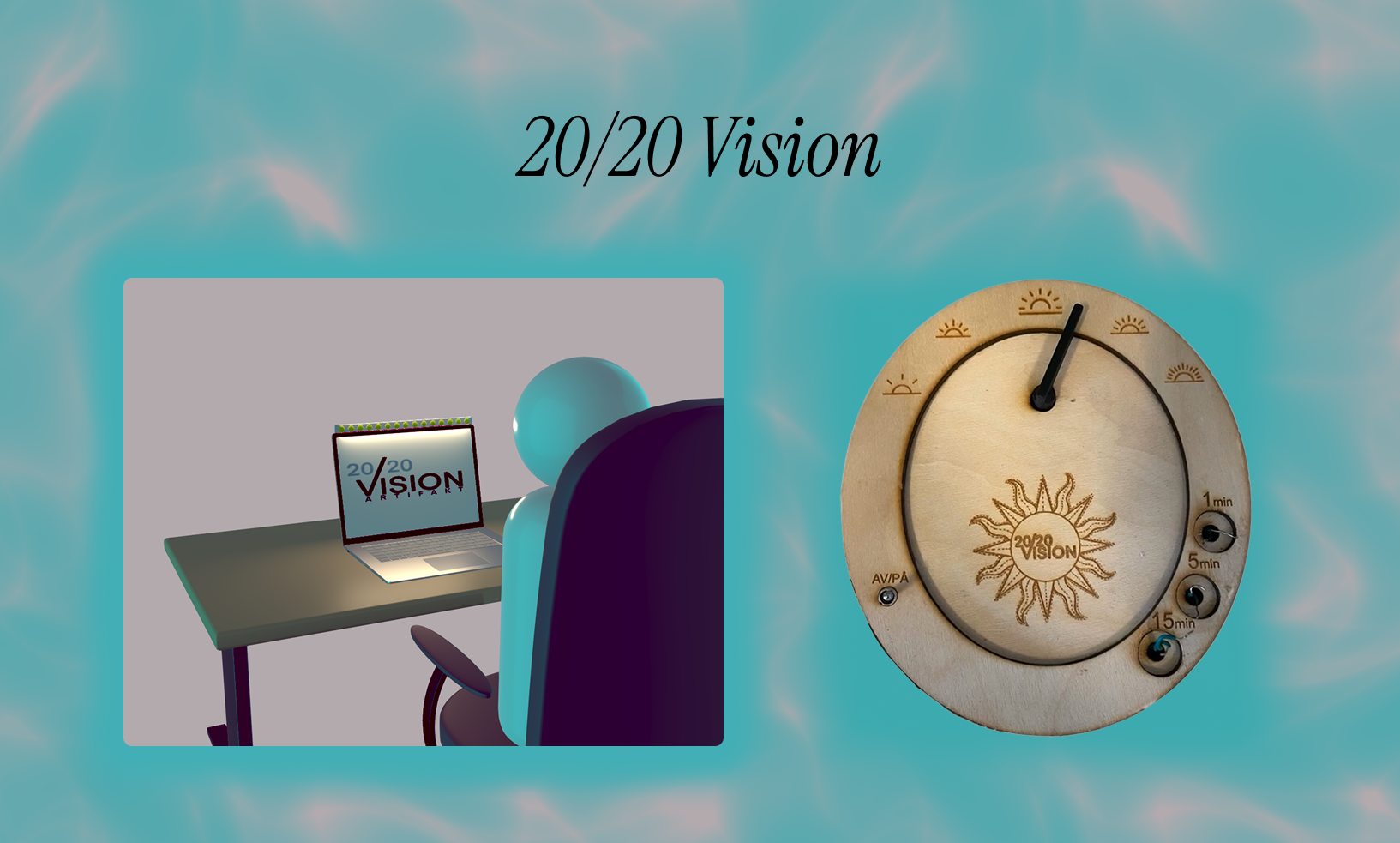
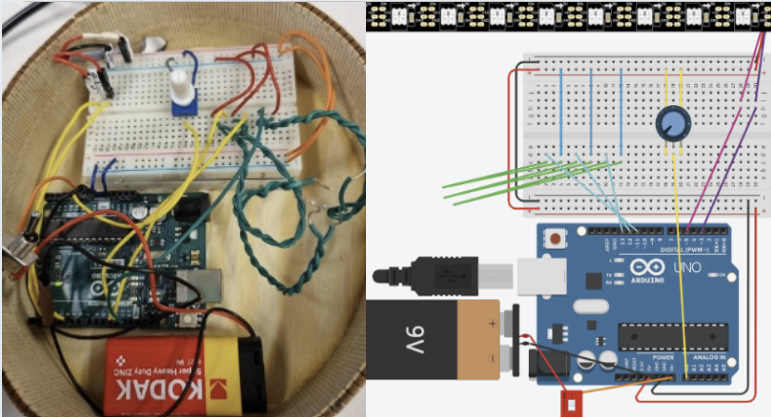
The final prototype combines an LED strip on the laptop with a compact sundial-shaped docking station.
Work sessions last 20 minutes. Movable balls select one, five or fifteen-minute breaks, while another activates a dynamic colour mode. A lever turns the system on and off and a dimmer controls brightness.
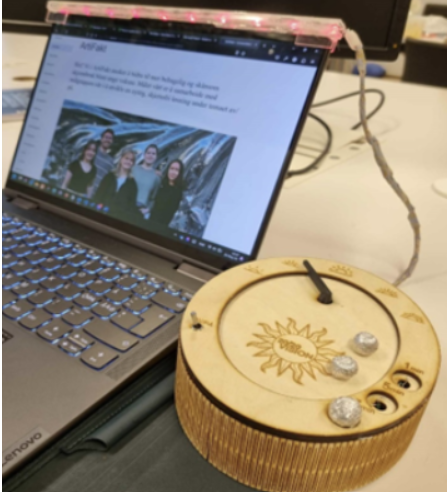
- 01The LED strip gives visible feedback without requiring another screen.
- 02Physical balls make break choices tangible.
- 03Work light and dynamic colours combine utility with personality.
Next project